Long-Term Tenants and the “Trashed” Myth
Charlene Jegen • June 24, 2026
A Property Manager’s Perspective

The body content of your post goes here. To edit this text, click on it and delete this default text and start typing your own or paste your own from a different source.

Three years into running Candescent, I thought the hard part was behind me. Most new businesses don't make it past the first two years. I hadn't just survived that stretch, I was doing something the rest of the industry thought was impossible: running a property management brokerage with no real estate sales attached, and having people respond to it. Then everything got harder at once.
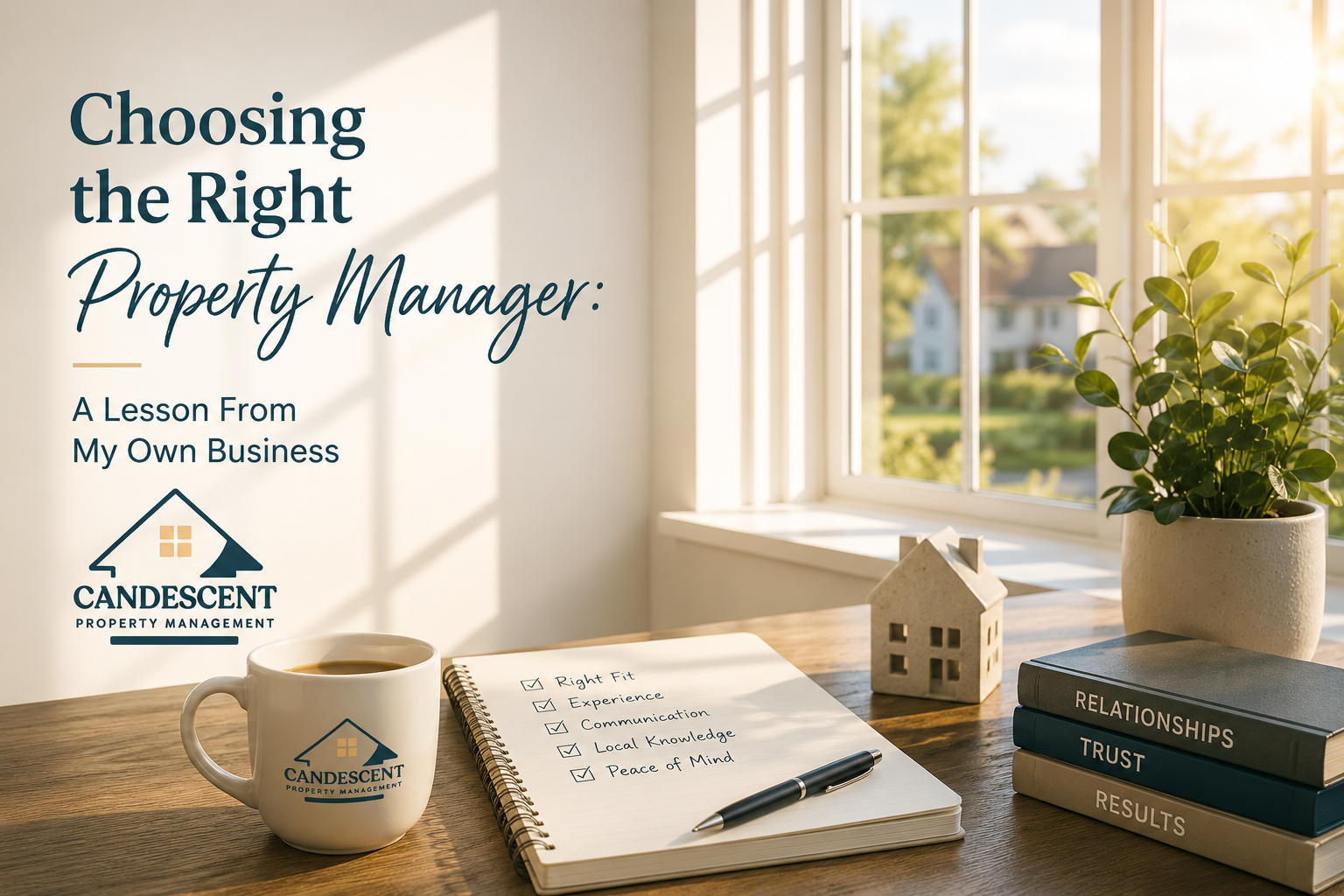
Every property owner has a story about a client, tenant, or partnership that didn't go the way they expected. Here's mine.

Most property owners don't hand over control easily. And honestly, they shouldn't. Your rental portfolio represents real money, real risk, and years of work. Walking away from the day-to-day, especially when you're managing from across the country, takes more than a signed contract. It takes proof. One of our clients, a seasoned investor with a full career and a portfolio she was managing remotely, learned that the hard way before she found us. By the time she reached out, she had a system in place. It worked, sort of. But it cost her something she couldn't get back: time, attention, and the mental load of being responsible for every single decision. Why Remote Property Management Without the Right Team Costs More Than You Think She was doing everything herself, just through other people. She relied on employees from her other business as her boots-on-the-ground support, which meant she was still the one following up, verifying, tracking. Lease renewals, insurance expiry dates, maintenance confirmations, photo evidence that work had actually been done to standard. She had built a system out of necessity, but it was a system that required her to be at the centre of it. When she came to us, she wasn't unhappy with her properties. She was unhappy with how much of herself it took to keep them running. The takeaway: If your current setup still requires you to track, verify, and approve at the operational level, you don't have a management system. You have a delegation system that still runs on your energy. How Trust Gets Built: One Property at a Time We started with one vacant property. The whole rental cycle, beginning to end: marketing, showings, tenant selection, lease preparation, move-in. Every step was documented and reported back to her, with pictures, follow-up confirmations, and nothing that moved forward without her sign-off. She was used to being responsible for every moving part, and she wasn't ready to let go of that yet. So we didn't ask her to. The first property went well. Then a second vacancy came up, and we did it again. Same process, same transparency. And as tenancy issues and maintenance came up over time, each one was handled quickly and professionally. The track record started to speak for itself. That's not a shortcut. It's just how it works. Trust in a property management relationship isn't claimed; it's earned, one handled situation at a time. The takeaway: If you're evaluating a property manager, ask how they communicate when things go wrong, not just how they pitch you at the start. The quality of the update is often more telling than the update itself. From Daily Recaps to Monthly Check-Ins Eventually, something shifted. She stopped needing the play-by-play. A monthly update was enough. Her properties were well taken care of, the tenants were stable, and she could engage at a higher level without being pulled into the details. That shift didn't happen because we asked her to trust us more. It happened because we gave her enough evidence that she didn't need to be involved anymore. The outcome she had originally hoped for when she bought those properties, reliable income without the operational grind, was finally actually working. The takeaway: Passive income from a rental property isn't automatic. It's what happens when the right management infrastructure is in place. Without it, you're not an investor. You're a landlord with extra steps. The Renovation That Changed the Numbers Here's where it gets interesting. Once that foundation of trust was solid, we were able to have a different kind of conversation. One of her properties was a bi-level duplex: three bedrooms upstairs with a full kitchen, two bedrooms downstairs with laundry but only a partial kitchen. Functional, but not optimized. During a break in the tenancies, we brought a recommendation: convert it into two separate, self-contained suites. The layout supported it, the timing was right, and the numbers made a compelling case. She said yes. Over six weeks, the renovation was completed. When it was done, the property went from generating $2,900 per month in rent to $4,000, an increase of $1,100 per month from a single property. That conversation only happened because the relationship had been built carefully enough that she trusted the recommendation. And we were only in a position to make it because we understood her investment goals, not just her maintenance requests. The takeaway: A property manager who understands your goals can spot opportunities you might not see from a distance. That's the difference between someone who manages your property and someone who manages your investment. What "Exceeding Expectations" Actually Looks Like It doesn't always look like a dramatic moment. Sometimes it looks like a six-week renovation and a rent increase. But more often, it looks like a client who goes from checking in every day to checking in once a month because she finally has someone she can rely on. That's the outcome we're always working toward: owners who can step back, tenants who are well-matched and well-supported, and properties that perform the way they should. If your rental portfolio still feels like a second job, it doesn't have to. Book a call with our team and let's talk about what full-service property management actually looks like in practice.

Why Having the Right Team Changes Everything

You own a rental property. Things break. That's just part of the deal. But here's where a lot of owners go wrong: they treat maintenance like a personal home project rather than a business decision. It seems harmless enough. You find someone cheaper. You think, "It's just a faucet." You figure you'll save a few bucks and get it handled. Until you're dealing with a leaking fitting, a damaged kitchen ceiling, a tenant without a working bathtub, and a contractor who can't come back until Monday. This is not a hypothetical. It happened to one of our clients recently, and the whole situation could have been avoided with one simple shift in how they approached the repair. Here's what went wrong, and how to make sure it doesn't happen to you. --- The Problem Isn't That You're Trying to Save Money Wanting to manage costs on your rental is completely reasonable. That's good business sense. The problem is when "saving money" means choosing the wrong person for the job. In this case, a property owner needed a tub faucet replaced. They had a general handyman they trusted, so they went with him. A licensed plumber quoted the same job for about $50 more. That $50 difference felt significant. It wasn't. The handyman completed the job, but had to cut out drywall in the hallway to access the piping. He patched it with a plastic panel. Then, one week later, a fitting leaked and water started dripping into the kitchen ceiling below the bathroom. On a Saturday. The handyman couldn't return until Monday. The tenant had no access to their bathtub for 48 hours. And the owner was now dealing with ceiling damage, a frustrated tenant, and a repair bill that wiped out any savings and then some. Here's the part that stings: a licensed, certified contractor guarantees their work. If something goes wrong on their end, they come back and fix it. That protection alone is worth more than any savings you'll find by going cheaper. --- Step 1: Know Your Actual Skill Set Before You Pick Up the Phone Before you call anyone, ask yourself one honest question: have you done this type of repair before, and what was the outcome? This matters more than it sounds. A lot of owners know enough to be dangerous. They've watched a YouTube tutorial, they own a decent drill, and they have a "guy" who can probably figure it out. That works fine for some things. It does not work fine for plumbing, electrical, anything involving permits, or anything that could cause damage if it fails. When you're assessing whether to DIY, outsource to a handyman, or bring in a certified trade, think about: - What's the worst-case scenario if this goes wrong? - Does this repair affect another unit, a shared wall, or a system that connects to something else? - Is this a repair that could create a liability issue if something goes sideways? If the answer to any of those gives you pause, call a professional. --- Step 2: Match the Job to the Right Kind of Contractor Not every repair needs a licensed tradesperson, and not every job should go to a general handyman. The key is matching the complexity and risk of the job to the person doing it. A good rule of thumb: - General handyman: Cosmetic repairs, minor fixtures, painting, and small jobs with a clear, low-risk scope - Licensed tradesperson (plumber, electrician, HVAC): Anything involving pipes, wiring, gas, permits, or a system that could fail and cause damage - Specialist contractor: Structural issues, foundation concerns, roofing, or anything requiring an inspection or sign-off When you're dealing with a rental property, the stakes are higher than in your own home. There's a tenant living there. There are timelines you're accountable to. And there's a legal standard of care you have to meet as a landlord. Paying the right person $50 more is not a cost. It's coverage. --- Step 3: Stop Starting From Square One Every Time Something Breaks A trusted contractor relationship isn't built in a day. It's built over dozens of jobs, across different properties, through the moments where something went sideways and you found out fast whether that person stood behind their work or disappeared. That history takes years to accumulate. And as a landlord managing a handful of properties, you're often starting from scratch every time a new problem comes up. You're calling around, asking for referrals, hoping the person who shows up actually knows what they're doing, and finding out the hard way when they don't. A property management team doesn't have that problem. Candescent has spent years building and vetting a roster of reliable local contractors across every trade. We know who to call for what, we know how they work, and we know they'll show up and stand behind the job. When something breaks at one of our properties, there's no scrambling, no guesswork, and no Saturday afternoon spent trying to find a plumber who picks up the phone. That's one of those benefits that doesn't always make the brochure, but owners feel it immediately. The relief isn't just that the repair gets handled. It's that you never had to think about it at all. --- Good Maintenance Doesn't Cost You. Bad Maintenance Does. Here's the mindset shift: stop thinking about maintenance as a line item to minimize and start thinking about it as the thing that protects the value of your investment. A poorly patched wall brings down the feel of a unit. A leaking fitting that isn't caught quickly can mean thousands in water damage. A tenant who loses access to a major bathroom fixture for two days because the repair failed is a tenant who is reconsidering their lease. You did the hard part. You bought the property. You're building something real. The point of owning a rental is to have it work for you, not to spend your weekends on hold with contractors, driving by to check on repairs, or calculating what the ceiling damage is going to cost. That's exactly what Candescent PM was built for. If you want to talk about how Candescent handles maintenance coordination so you don't have to think about any of this, book a call with our team and we'll walk you through exactly how it works.

Plan for the Worst Case Scenario (Before Your Rental Property Does It for You)

Some investments look better on paper than they do in real life. Others look unremarkable at the time and quietly change everything. Mine was a three-bedroom condo in Hinton, Alberta. I bought it after the end of a long-term relationship, when I was rebuilding from scratch and needed to plant a flag somewhere financially. I wasn't thinking about returns on equity or cap rates. I was thinking about starting over, and that property was step one. What I didn't know then was that owning that property would eventually shape the career I built a decade later. At the time, it was just a financial decision. The career part was a happy accident. Good Intentions Don't Always Make Good Investments Before we get into what went right, let's talk about what can go wrong, because I've seen it up close, and it usually comes down to one thing: making decisions without the experience to back them up. One common mistake I see a new investor make is buying a property with short-term rental potential in mind and defaulting to "bigger is better." More bedrooms sounds like more income. But if those bedrooms don't come with additional bathrooms, you're not looking at a premium nightly rate; you're looking at higher maintenance costs and a property that sits empty during the shoulder months. The owner had good intentions and genuine excitement about the investment. What they didn't have was someone in their corner who had seen that scenario play out before. That's exactly what a property manager with real experience in investment property in Hinton brings to the table. The numbers look very different when someone who knows the local market is reading them alongside you, before you sign. What Owning a Rental Taught Me That No Course Could When I became a licensed property manager in 2018 and eventually founded Candescent, I wasn't starting from zero. I already knew what it felt like to be the owner on the other end of the phone — and that wasn't something I'd planned for. It was just what happened when you own a rental property long enough. I knew the low-grade anxiety of wondering what was going on at that property when you weren't there. The mental math of whether a repair was worth it. The complicated feeling of being financially invested in a place that's also someone else's home. That experience gave me something that's hard to manufacture: genuine empathy for the owners I work with, whether they're brand-new investors trying to figure it all out or seasoned landlords who are simply done doing it themselves. When I sit down with a new client, I'm not guessing at what they're feeling. I've been there. The Real Value of Having Done It First Here's what that first property actually gave me, none of which I saw coming when I bought it. I gained hands-on knowledge of what property ownership looks like from the inside, not just the spreadsheet. I built relationships with contractors and local professionals that took years to earn. I developed a real frame of reference for what good management looks like, and what it costs when it's missing. Those relationships and that context are part of what Candescent brings to every property we manage. It's not just systems and software. It's knowing who to call at 7 PM on a Saturday, and trusting that they'll show up. What Smart Investors Do Differently The investors who sleep well at night tend to have one thing in common: they've separated the financial decision from the operational one. Buying a rental property is a financial move. Managing it day-to-day is a job. And it's a job that shows up at inconvenient times, requires deep knowledge of landlord-tenant law, and involves a level of human complexity that no one fully warns you about before you buy. The investors who thrive long-term are the ones who recognize early that doing both well is genuinely hard, and who find the right support before they burn out on the parts they never wanted to do in the first place. Passion matters here, too. The property managers who are good at this work aren't just organized; they actually care about what happens to your investment and to the people living in it. That's the kind of team worth finding. The Investment That Keeps Paying Off Is the Right Support The best investment you'll ever make might not look like the flashiest one. It might be the property that teaches you something, or the decision to stop managing alone and finally get the right team behind you. If you're curious about what professional property management actually looks like in Hinton, and whether it makes sense for your situation, I'd love to talk. Reach out to Candescent Property Management here and we'll give you a straight answer.

Most real estate professionals will tell you that sales is the goal. Close the deal, hand over the keys, move on to the next one. I used to work inside that system. And it almost convinced me to ignore everything I actually knew. The Path That Almost Wasn't When I joined a well-established real estate brokerage early in my career, the message was clear: go straight to sales. That's where the commissions are. That's what everyone does. But my background and passion were in property management — the day-to-day work of protecting investments, building tenant relationships, and making sure landlords could actually sleep at night. I had the knowledge and the drive. The brokerage just didn't see the opportunity. So for a while, I competed for a slice of the sales market alongside a long list of other agents. It was fine. It just wasn't right. The Turning Point What changed things wasn't a sudden epiphany. It was a slow, honest recognition that the market in Hinton had a real gap — and that nobody was filling it. Landlords had no dedicated, professional support. Property owners were managing everything themselves: tenant issues, maintenance calls, rent collection, legal questions, all of it stacked on top of full-time jobs and full lives. The problem was visible, the need was real, and I had exactly the skills to address it. After less than a year in sales I decided to leave, that’s when the brokerage finally came around and said I could give property management a try within their structure. But it quickly became clear that inside a sales-first brokerage, property management would always be secondary. So I left to build something where it wouldn't be. In 2022, Candescent Property Management was officially established — a business built from the ground up with property management as the priority, not an afterthought. I haven't looked back. What Makes Our Approach Different Here's the thing about real estate sales: the relationship has a natural endpoint. You help someone buy or sell, the transaction closes, and contact fades until they're back on the market years later. Property management doesn't work that way. When we take on a client at Candescent, we're in it for the long term. The relationships I build with property owners last years, not weeks. We know your property, your tenants, your preferences, and your goals. You don't have to re-explain your situation every time something comes up, because we already know it. That continuity matters more than people realize. It means faster decisions, fewer surprises, and a level of trust that only builds with time. What This Looks Like in Practice Take Jessica. She owned multiple residential rentals in Hinton and had been managing everything herself for over a decade. She had systems. She knew what she was doing. But she was also running a business full time, and the combination eventually caught up with her. One property had gotten difficult enough that she was seriously considering selling — not because the investment didn't make sense financially, but because she was exhausted by the management side of it. She called me instead. Within a short time, the calls stopped. The month-end anxiety disappeared. Now, the first of the month comes and money appears in Jessica's account. If something comes up, I call with a solution, not a problem. The relationship didn't end when a transaction closed; it grew stronger every year. That's what it looks like to trust your investment property to an expert. The Numbers Back It Up This approach isn't just good in theory. Our team currently manages 90+ properties with a 98% tenant satisfaction rate and 99% on-time rent collection. Those aren't numbers you hit by accident — they come from showing up consistently, knowing the local market deeply, and genuinely caring about the outcome for every owner and every tenant. According to the Canadian Federation of Apartment Associations , landlord-tenant disputes and vacancy costs are among the biggest financial risks for residential rental property owners. Rigorous screening and proactive management are the most effective ways to avoid both. That's not a side service at Candescent — it's the whole model. The Question Worth Sitting With If you own an investment property — or you're thinking about becoming an investor — here's something worth asking yourself honestly: are you managing the property, or is the property managing you? The investment was probably a smart decision. It just might need the right team behind it. Ready to talk about what full-service property management actually looks like for your situation? Visit hintonrentals.com to learn more or reach out to the Candescent team directly. We're always happy to walk you through the process and set realistic expectations from day one.

Imagine this: two units in the same condo complex, same layout, same square footage, similar finishes. One is listed at $1,400 a month. The other is rented for $1,800. That's not a typo — and it's not unusual. We've seen it happen right here in Hinton. The difference between those two numbers isn't luck or negotiation skill. It's market awareness. And for property owners, that gap represents thousands of dollars a year, either captured or quietly left on the table. A Number Worth Paying Attention To Here's the statistic: Hinton's average residential rent fell from $1,297 in 2023 to $1,204 in 2024 — a drop of $93 per month. Source: Adapted from Statistics Canada, table 34-1001-33 (Canada Mortgage and Housing Corporation, average rents for areas with a population of 10,000 and over) and the Government of Alberta's Rural Apartment Vacancy and Rental Cost Survey. Before you react to that number, let's put it in context. Most rental statistics are pulled from major urban centres — Calgary, Edmonton, Vancouver. They don't tell you much about what's happening in a town like Hinton. But Hinton isn't immune to the same market forces, and this data confirms what we're seeing on the ground: rental rates here are shifting, and they deserve your attention. A quick note on the data: Alberta's rural rental surveys have limitations. Sample sizes in smaller municipalities can be smaller, and reporting methods vary. We'd encourage you to treat this as directional rather than definitive — and pair it with a current, local assessment of your specific property. Why This Affects You More Than You Think Whether you're actively marketing a vacant unit or heading into a lease renewal conversation, the current market rate is your most important number. Price too high and you risk extended vacancy — a month of empty is often worth more than a small rent premium. Price too low and you're subsidizing your tenant's lifestyle at the expense of your own investment returns. Neither outcome is good. And both happen more often than they should — not because property owners are careless, but because setting a rent rate is a shot in the dark if you aren't watching the market as part of your daily routine. Current, area-specific rental data isn't always easy to find or interpret. That's part of what we do for our clients at Candescent PM. The Cost of "I Think It Should Be Around..." Here's what guessing costs you in practical terms: If you undercharge by $100/month — which is less than the year-over-year swing in Hinton's average — that's $1,200 a year. Over five years, that's $6,000 left uncollected. On a single property. On the flip side, overpricing your unit relative to the current market doesn't just delay your income — it can attract less qualified applicants or keep a unit sitting empty while you wait for a tenant who never comes. Incremental, data-informed adjustments at each lease renewal are far less disruptive than sudden jumps. They keep your relationship with good tenants intact and keep your income growing steadily. What Good Market Analysis Actually Looks Like You're not just looking for a number — you're looking for context. When we assess a property's rental rate, we're comparing similar unit types in similar buildings, looking at what's actively listed, what's been sitting, and what's been leased quickly. We're also factoring in local employment trends, housing supply, and what we know from managing 90+ properties across Hinton. That combination of data and on-the-ground knowledge is hard to replicate if you're only checking in on the market occasionally. What This Means for You Right Now If you haven't reviewed your rental rate against the current market in the last six months, there's a reasonable chance you're either undercharging or at risk of being priced out. Both are fixable. But you need accurate, current information to make a confident decision. Have you compared your rental rate to what's currently available in Hinton? If you're not sure — or if you haven't looked lately — that's worth knowing. Contact us today for a rental rate evaluation on your property. We'll tell you where you stand and what the market actually supports right now. Property managed. Peace of mind, delivered.

As a vendor, partnering with a property management company can open up new opportunities and streamline your business operations. Here’s why you should consider this valuable partnership. Steady Stream of Work: Property management companies manage multiple properties, which translates to a steady stream of work for vendors. This consistent demand helps stabilize your business income and allows for better planning and resource allocation. Timely Payments: Property management companies often have efficient payment systems in place. This ensures that you receive timely payments for your services, improving your cash flow and financial stability. Long-Term Relationships: Building a strong relationship with a property management company can lead to long-term contracts and repeat business. Trust and reliability can result in your company becoming the go-to provider for maintenance, repairs, and other services. Access to Multiple Properties: Partnering with a property management company gives you access to multiple properties within their portfolio. This exposure can lead to additional work opportunities and help expand your business network. Streamlined Communication: Property management companies often act as a single point of contact, streamlining communication and reducing the complexities of coordinating with individual property owners. This efficiency can save you time and reduce misunderstandings. Partnering with a property management company can provide vendors with numerous benefits, from a steady flow of work to timely payments and long-term relationships. It’s a strategic move to grow and stabilize your business. Interested in partnering with us? Get in touch today to explore how we can work together for mutual success!